
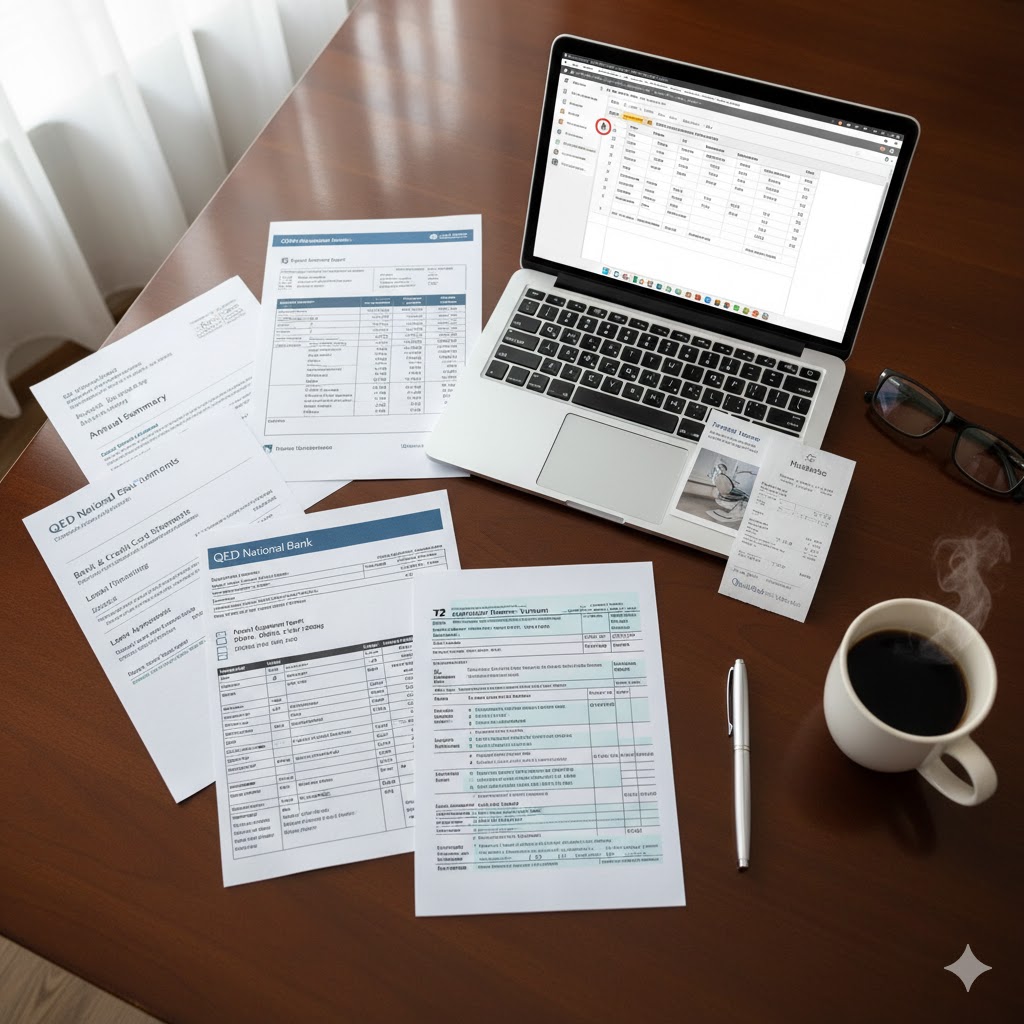
Corporate year-end does not become stressful because of the filing itself. It becomes stressful because clinic owners begin preparing far too late. By the time the T2 deadline appears on the calendar, the financial records needed for a clean return are scattered across emails, folders, software tools, and sometimes even the glove compartment of a car.
The result is predictable. Missing documents. Incorrect balances. Receipts that cannot be recovered. Adjusting entries that could have been avoided. What should be a straightforward reporting cycle turns into a scramble that feels unnecessary once everything is finally submitted.
Preparing early is not about doing more work. It is about lowering the cost of last-minute effort and giving your accountant a complete picture without delays. When your records are current and easy to access, your T2 becomes a confirmation process rather than a reconstruction project.
Here are the documents every dental corporation should have in order before the year-end approaches.
1. Bank and Credit Card Statements
Your accountant needs full statements for all business accounts covering the entire fiscal year. This includes operating accounts, savings accounts, credit cards, and any financing or loan accounts. The goal is simple. Every transaction must be visible and traceable.
2. Loan Agreements and Equipment Financing
Most dental practices rely on financed equipment. Chairs, X-ray units, scanners, software subscriptions, and leases all affect your T2 return through interest and capital cost allowance. Gather the original agreements and the annual statements now. Do not wait until someone asks for them.
3. Payroll Summary Reports
Whether you use Payworks or another platform, your accountant needs annual payroll summaries, remittance confirmations, and records of employment if any staff changes occurred. Clean payroll records prevent misstatements in CPP, EI, and income tax reporting.
4. Vendor Invoices and Receipts
This seems obvious, yet missing receipts remain the single largest delay in year-end preparation. If you use Hubdoc, ensure every document has been uploaded and coded. Do not keep receipts in piles. Once the year ends, the chance of recovering lost paperwork drops sharply.
5. Insurance Reconciliation
Dental clinics often have timing gaps between insurer payments and the services they relate to. Closing the year without reconciling outstanding claims creates distortions in receivables and revenue. Make sure your clinic management software and your bank deposits agree before year-end arrives.
6. Asset Purchases and Disposals
If you purchased or disposed of equipment during the year, document the date, cost, and method of payment. These details are essential for calculating capital cost allowance accurately.
7. Prior Year Adjustments
If last year’s accountant made year-end adjustments, ensure you have those journal entries. They affect opening balances and can cause errors if they are not carried forward correctly.
Preparing these documents early creates a smoother year-end and eliminates the anxiety that comes from rushing. More importantly, it supports better tax planning. When your accountant understands your numbers before the deadline, you receive guidance while you can still act on it.
Corporate year-end should not feel like an emergency. It should feel like a routine part of running a well-organized clinic.